
The short version
Multifilament is soft, powerful, and arm-friendly. Co-poly is stiff, controllable, and built to bite the ball. If you swing hard and want the ball to do something on the way down, you want co-poly. If you play twice a month and just want the ball back, stay on multi.
Everything below is the long version.
What multifilament actually is
Multifilament strings are hundreds — sometimes thousands — of thin nylon or polyester microfibers bundled and wrapped inside a coating. The construction mimics natural gut: soft, elastic, forgiving. When you hit the ball, the whole bundle deforms, launches, and springs back.
That's what makes multi feel plush. It's also what caps its ceiling. A string that deforms easily gives the ball its own energy back, which means power without the control layer on top. On a hard swing, the ball leaves the strings faster than you can aim it.
What co-poly actually is
Co-poly is a single monofilament — one stiff polyester strand — with additives (silicone, polyamides, other polymers) engineered into the extrusion. That stiffness is a feature, not a bug. On contact, the string bed barely deforms; instead, the mains slide sideways under the ball, bite in, and snap back into place. That snapback is where topspin comes from.
You feel co-poly less. It gives you less free power. In exchange, it gives you a ball that dips inside the baseline when you swing out on it.
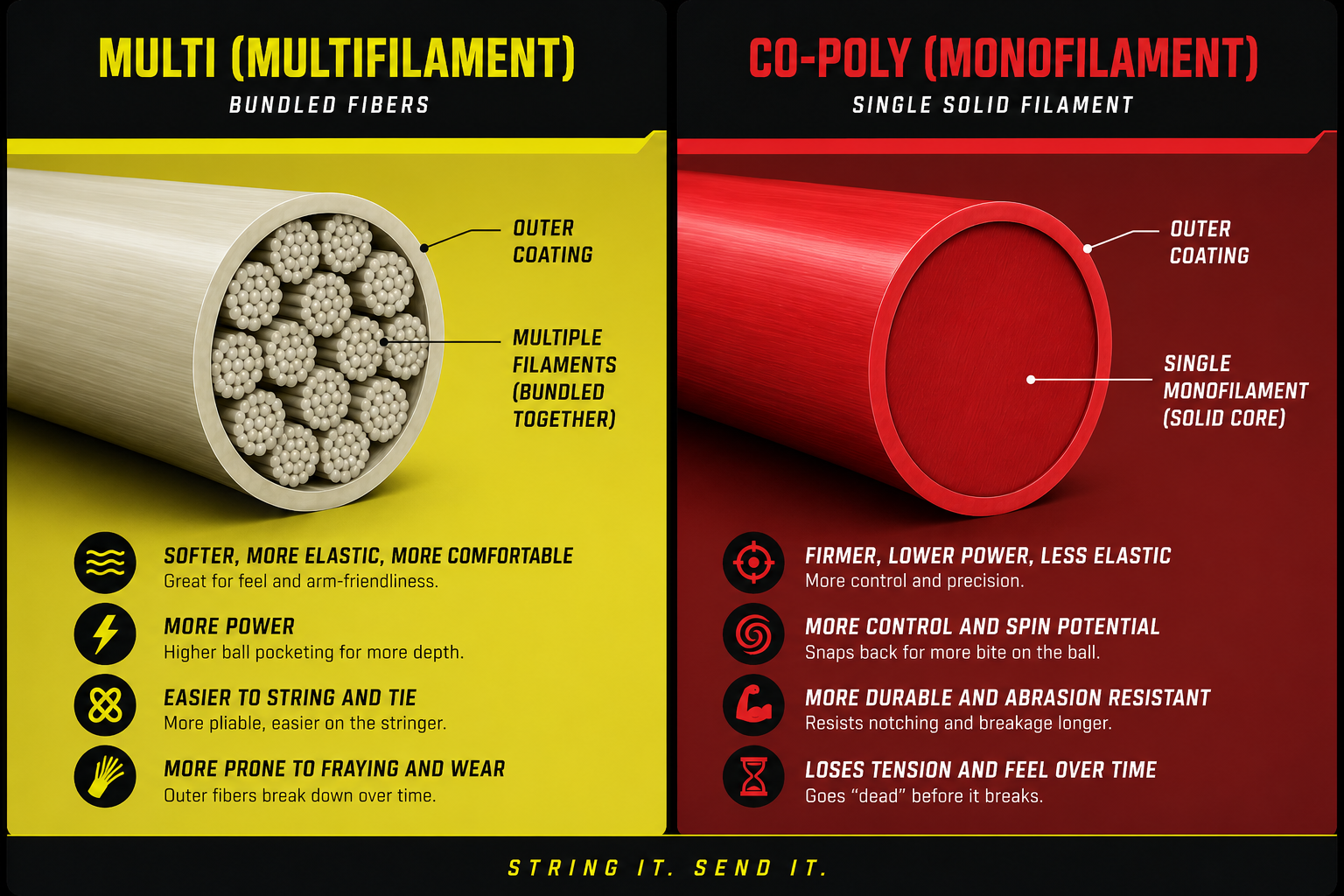
Side by side
Who should be on multi
Who should be on co-poly
The switch: what to expect
First session on co-poly, everything will feel short. Your usual swing will produce a shorter ball. That's the point — the string isn't adding power for you anymore. Trust it and swing bigger. Within a few hits, the ball starts diving inside the baseline instead of sailing over it.
Second thing: string it lower than your multi tension. If you played multi at 55, try co-poly around 50. If your arm is sensitive, drop a couple more pounds. Higher tensions on poly feel stiffer; lower tensions inside the range feel livelier and, for most players, more comfortable. If a setup causes pain, stop playing it.
Third: restring on a schedule. Poly loses tension fast and usually goes dead before it breaks. Rule of thumb — restring as many times per year as you play per week. Play three times a week, aim for three restrings a year.
The hybrid option
Poly mains, multi crosses. The mains do the spin work — they're what slides and snaps back on the ball. The crosses just hold the mains in place, so a softer multi cross can soften the overall feel without giving up bite. Try SNAP Spin in the mains with your favorite multi in the crosses.
It's a popular setup for players who want poly's bite without the stiffness of a full-poly bed.
Where SNAP fits
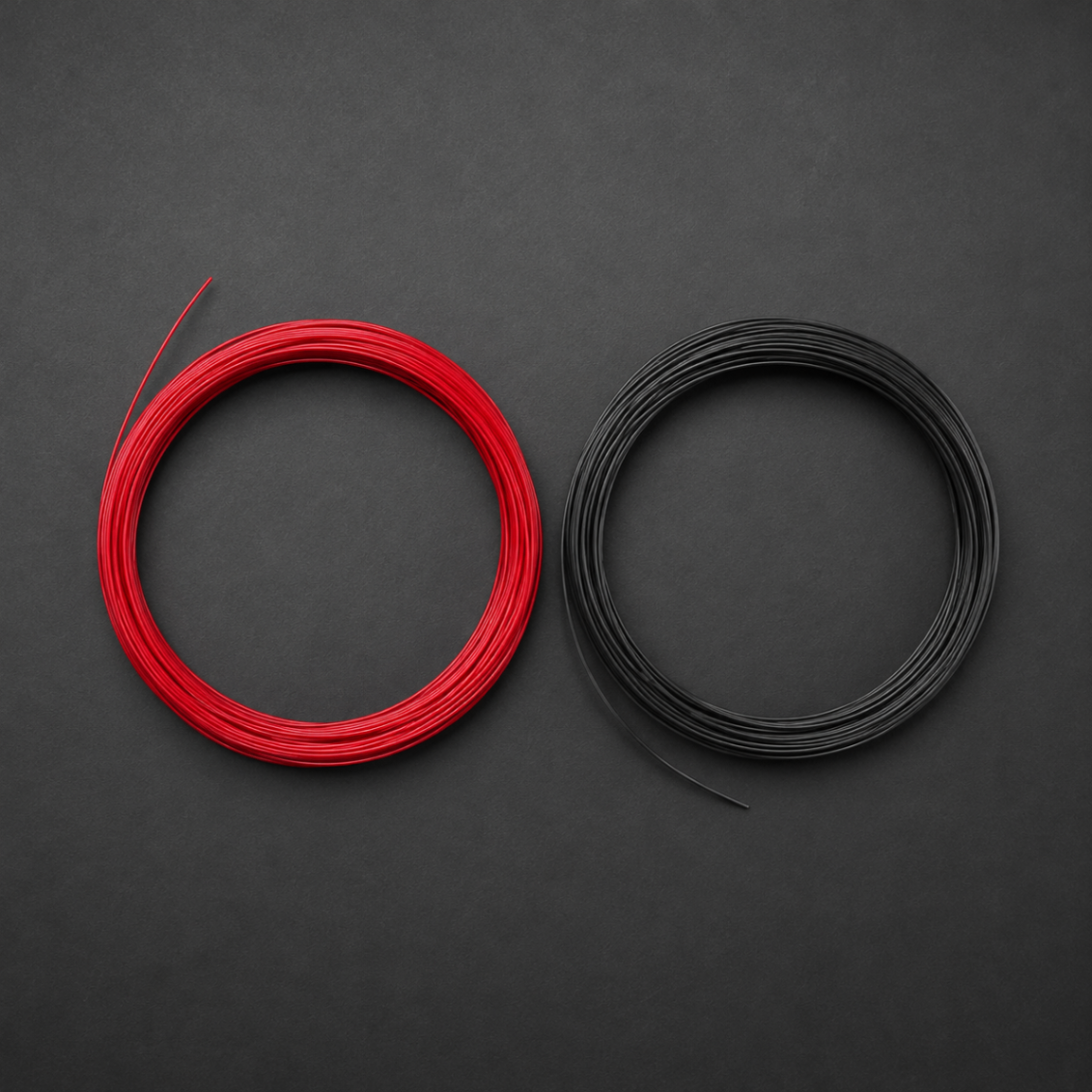
Two co-poly strings. No gimmicks. No tour endorsements. Both string at the low end of the poly range and both hold up in match play.

Not sure which SNAP is you?
The stringing guide has a six-question quiz that spits out the right string and tension. Stringing it yourself? Look up your frame in the stringing pattern reference. Or email us — same voice on the other end.
String it. Send it.